Introduction:
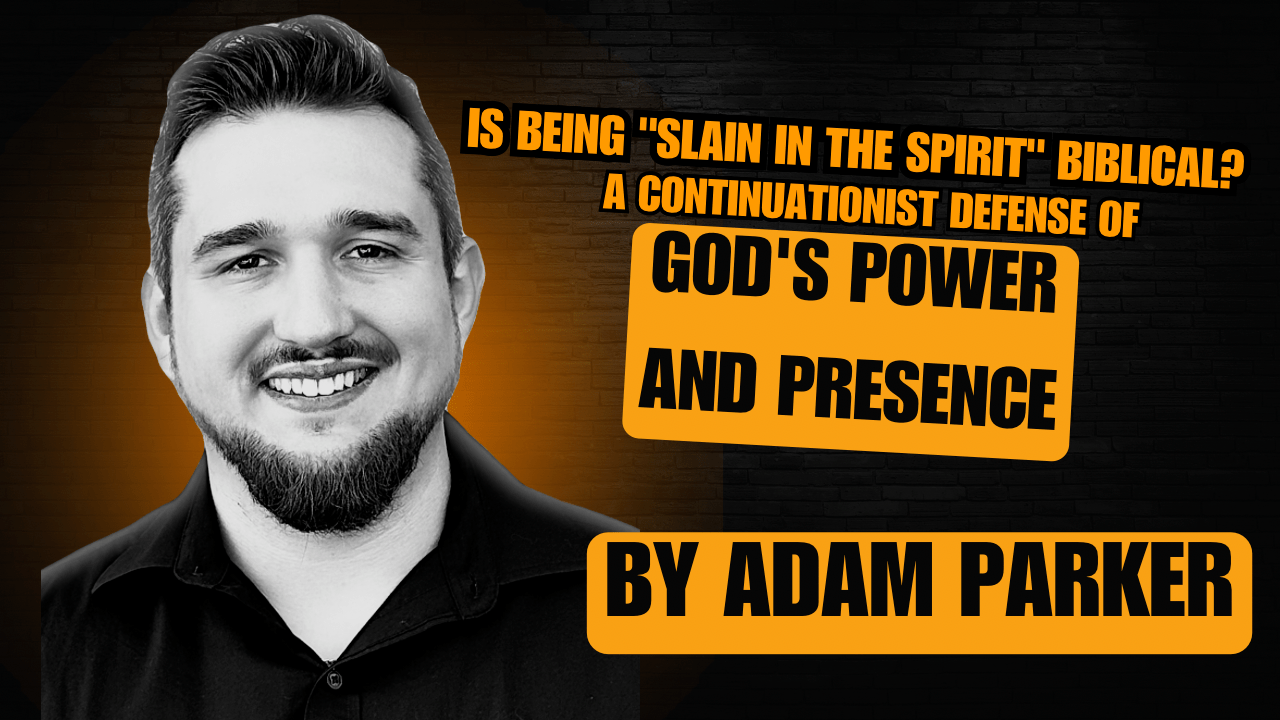
One of the more controversial manifestations within Pentecostal and Charismatic circles is the phenomenon commonly referred to as being “slain in the Spirit.” Critics, especially those outside what I refer to as the Spirit-filled tradition, often argue that this practice is unbiblical, citing the fact that the phrase itself is nowhere to be found in Scripture. For them, even the absence of explicit terminology is sufficient grounds to reject the experience altogether.
But I find this line of reasoning to be both theologically shallow and logically inconsistent. The mere fact that a phrase doesn’t appear in the biblical text does not automatically render the concept unbiblical. After all, the word “Trinity” doesn’t appear in the Bible either, yet few orthodox Christians would deny its foundational importance to our understanding of God. The real question isn’t whether a term is found in the Bible, but whether the phenomenon it describes is consistent with biblical patterns, theology, and the nature of God’s interaction with humanity.
That said, I must confess: I don’t particularly like the term, “slain in the Spirit.” I understand where it comes from, and I’ve heard it used my entire life, but I believe it carries unnecessary baggage and can easily be misunderstood or misrepresented. In my view, a more biblical and theologically rich term would be something like encumbered by the Spirit or overcome in the presence of God. These phrases better capture the biblical theme of human weakness encountering divine power. What we are speaking of is not some theatrical collapse, like at an over-hyped Benny Hinn Crusade, but rather a genuine, often spontaneous, response to the overwhelming presence and work of the Holy Spirit.
Now that we’ve established the framework and terminology, let me offer some personal context, because my perspective on this issue isn’t merely academic. It’s shaped by a lifetime immersed in Pentecostal tradition, both as a witness and as one who has personally experienced what many refer to as being “slain in the Spirit.”
My Background: A Life immersed in Spirit-Filled Ministry
As I mentioned earlier, my perspective on this phenomenon isn’t speculative or borrowed, it’s rooted in decades of personal experience. I was raised in a Pentecostal context from birth. My parents were part of the Church of God, and I grew up surrounded by Spirit-filled worship and ministry. My father served as the district youth pastor in our area in Oklahoma, and he also served as the worship leader and our local church’s Sunday school teacher. Ministry in this environment wasn’t just something my family participated in, it was woven into the very fabric of our lives.
From an early age, I witnessed being “slain in the Spirit.” I saw people fall under the power of God during worship services, altar calls, and prayer meetings. Contrary to popular belief, these weren’t wild or chaotic displays, they were often quiet, reverent, and marked by deep moments of conviction, healing, and personal encounter with the Holy Spirit. As a child, I may not have understood everything I was seeing, but I knew something real was happening.
When my father stepped away from ministry and we moved to Wisconsin, we began attending churches within the Assemblies of God. I spent ten formative years within that tradition; years filled with youth camps, revival services, and altar times where I again saw people overwhelmed by the Spirit’s power. At these camps, especially, it wasn’t uncommon to see dozens of students laid out before the Lord, not out of fake emotionalism, but out of sincere encounter with His presence.
Later, as I entered ministry myself, I became a youth pastor under the covering of the Fellowship of Christian Assemblies. This network, while theologically broad, still embraces the active work of the Holy Spirit. I’ve seen this phenomenon occur time and time again; enough to be convinced that what many describe as being “slain in the Spirit” is not just experiential hype. It’s a genuine, Spirit-wrought moment in which a person is encumbered, overwhelmed, and even physically affected by the presence and power of God.
Now, let me be clear: my affirmation of this phenomenon is not grounded solely in my experience. I hold firmly to the doctrine of Sola Scriptura. I believe that Scripture is the final authority for faith, doctrine, and practice. But I do not believe Sola Scriptura means that God cannot do something simply because it isn’t explicitly described in Scripture. I believe God can do anything He pleases, as long as it is consistent with His nature and His revealed Word. That’s why I test every spiritual experience, every prophetic word, every manifestation, against the standard of Scripture. If it contradicts God’s Word, it is to be rejected. But if it aligns with what we know of God’s character and the fruit of the Spirit, then we should not be so quick to dismiss it.
With this context in mind, I want to now turn to a key objection at the heart of this debate: the claim that being “slain in the Spirit” is unbiblical simply because the term itself does not appear in the Bible, nor is it explicitly described.
A Word’s Absence Doesn’t Mean a Truth is Absent
The absence of a specific phrase or description in the Bible does not, in and of itself, make an experience unbiblical. While we must always be on guard against unbiblical extremes, we must also recognize that God is not limited to our preferred language or categories. If an experience is consistent with God’s revealed character, His nature, and the patterns of how He has worked throughout redemptive history, then we are on dangerous ground when we dismiss it simply because a modern phrase for it isn’t found in the text.
This leads us to the heart of the objection so often raised by cessationists, skeptics, and even well-meaning believers: the claim that being “slain in the Spirit” must be rejected because they believe it is not found in Scripture. As I said previously, for many, the fact that the term “slain in the Spirit” alone is treated as sufficient evidence that the experience is illegitimate. But this is not a biblical argument; it’s a logical fallacy. Arguing, “It’s not in the Bible, therefore it’s not of God,” is known as an argument from silence, and it’s an unsound way to reason about spiritual matters.
With that said, as someone who firmly holds to Sola Scriptura, I think it is imperative that I make an important distinction: Sola Scriptura is not the same thing as biblicism. Sola Scriptura affirms that Scripture is the final authority for life, doctrine, and practice. It is the standard by which all spiritual experiences and teachings are to be tested. However, biblicism, in its hyper-literalist form, is the view that unless something is explicitly stated in the Bible, it is automatically false, or at best, spiritually suspect.
This rigid form of biblicism creates a kind of hyper-wooden worldview that ironically imposes limitations on God that the Bible itself never does. For example, I previously pointed out that the word “Trinity” is not in the Bible; yet the concept is thoroughly biblical. The same goes for terms like “incarnation,” “omniscience,” or even “eucharist.” We use extra-biblical language all the time to describe thoroughly biblical truths. The key is not whether the term is found in Scripture, but whether the truth it points to is consistent with the witness of Scripture.
Let me be clear: I agree that we should never accept or normalize experiences that contradict the Bible. But I also believe we should never reject something solely because it isn’t captured in chapter and verse with a specific label. The real question is: Is this consistent with the God revealed in Scripture? Does it align with how He has moved in the past? Does it produce the kind of fruit the Spirit is known to produce?
These are the kinds of questions we must ask; not whether the exact phrase “slain in the Spirit” can be found in our concordance.
Why “Slain in the Spirit”? Understanding the Term, the Experience, and the Biblical Pattern
Before we go further, we need to ask: why is this phenomenon called “slain in the Spirit” in the first place? The term is jarring to some, perhaps even unsettling, and I understand that. It’s dramatic. It’s evocative. And, like many phrases that emerge from revivalist contexts, it’s rooted more in observation than in exegesis.
I have always understood that, historically, the phrase, “slain in the Spirit,” gained traction during the great revivals of the 18th and 19th centuries, especially within the Holiness and Pentecostal movements. It was used to describe individuals who, during times of intense prayer, preaching, or worship, suddenly fell to the ground under what was believed to be the overwhelming power of the Holy Spirit. The term, “slain in the Spirit,” was never meant to imply death in the literal sense. Rather, it was meant to express a kind of spiritual incapacitation, where the body simply could not bear the weight of divine encounter.
As I said previously, I’ve never been particularly fond of the term. While I understand its historical roots, I believe it often conjures up more confusion than clarity. At the risk of redundancy, I will say again that I personally prefer phrases like encumbered by the Spirit or overwhelmed in the presence of God. These expressions seem to better reflect what’s actually happening: humans, frail as we are, responding physically to the uncontainable reality of God’s presence. They are not being theatrically “slain.” They are being overcome by divine encounter. And as we will soon see, while the term may be modern, the experience is certainly not foreign to Scripture.
Falling Under God’s Power: Biblical Precedent and Pattern
When we examine the biblical text carefully, we find repeated examples of men; godly men, who fall to the ground when faced with the manifest presence of God. These are not scenes of chaos, but of reverence. They are moments when the holiness, glory, and power of God are so near, so heavy, that the human frame simply cannot stand under it. Let’s take a look at some of these instances:
Daniel 10:8–10
“So I was left alone and saw this great vision, and no strength was left in me. My radiant appearance was fearfully changed, and I retained no strength. Then I heard the sound of his words, and as I heard the sound… I fell on my face in deep sleep with my face to the ground. And behold, a hand touched me and set me trembling on my hands and knees.”
Daniel, a righteous man, a prophet, and a man of prayer, fell face down when confronted with the divine. The presence of the heavenly being drained him of all strength. He didn’t decide to fall; he collapsed under the weight of what he saw and heard. That’s not disorder; it’s divine impact.
Ezekiel 1:28
“…Such was the appearance of the likeness of the glory of the Lord. And when I saw it, I fell on my face, and I heard the voice of one speaking.”
Again, we see a prophet fall when the glory (kavod) of the Lord appears. Ezekiel’s response is physical, immediate, and involuntary. The glory was too much to stand in.
Revelation 1:17
“When I saw him, I fell at his feet as though dead. But he laid his right hand on me, saying, ‘Fear not, I am the first and the last…’”
This is John, the beloved disciple, and his encounter with the risen, glorified Christ on Patmos. The sight of Jesus in His glory was so overwhelming that John collapsed. He didn’t fall asleep. He didn’t bow out of reverence. He fell as though dead. And once again, the Lord touches him, just like in Daniel, to restore him.
John 18:6
“When Jesus said to them, ‘I am he,’ they drew back and fell to the ground.”
This moment is often overlooked. Jesus is in Gethsemane. Soldiers have come to arrest Him. When He identifies Himself using the divine name, Ego Eimi, “I AM,” they fall to the ground. These weren’t worshippers. These were hardened Roman soldiers and temple guards. Yet even they could not remain standing in the presence of the divine.
2 Chronicles 5:13–14
“…the house, the house of the Lord, was filled with a cloud, so that the priests could not stand to minister because of the cloud, for the glory of the Lord filled the house of God.”
This, to me, is one of the most compelling Old Testament examples. The priests, whose entire role was to minister before God, could not stand because the glory of the Lord filled the temple. They didn’t choose to pause the service. They were physically unable to continue. The weight of God’s presence was too much. The Hebrew word for glory, kavod, literally means “weight” or “heaviness.” God’s glory has substance; it has impact. And when it descends, it changes the atmosphere and affects human bodies.
The Kavod of God: When Heaven Weighs Down on Earth
This concept of God’s kavod, (His glory) as a weighty, substantial presence, is crucial to understanding what’s taking place in moments where people fall under the Spirit’s power. God’s glory is not abstract. It’s not a vapor or a poetic metaphor. It is real. And when that glory intersects with our broken, finite, physical selves, something has to give.
In every one of these biblical moments, the human response is not fabricated or forced. No one says, “Well, now that God is here, I should fall.” They simply do. Their bodies respond instinctively to divine glory, either in awe, fear, or sheer incapacity to stand in the presence of majesty.
So when people fall under the power of the Spirit today, I do not see this as something strange, or foreign to the biblical witness. I see it as deeply consistent with how people in Scripture responded when God drew near.
Experiential Reality and the Logic of Dismissal
To reject this simply because the term, “slain in the Spirit,” doesn’t appear in Scripture is to confuse language with reality. It’s a textbook case of missing the forest for the trees. Another thing I would like to mention briefly is that, to argue that this cannot be of God simply because some people have abused or faked it is another logical misstep, a non sequitur. Abuse does not negate proper use. False manifestations do not invalidate true ones. We don’t reject prophecy because false prophets exist. We don’t reject worship because some do it with wrong motives. And we should not reject spiritual encounters simply because some have turned them into performance.
What matters is not whether we’re comfortable with the terminology. What matters is whether the phenomenon aligns with the biblical precedent, the nature of God, and the fruit it produces. And by that standard, I am confident that genuine instances of being overwhelmed by the Spirit’s presence are not only real, they are deeply, profoundly biblical.
A History of Being Overwhelmed: Church Fathers, Reformers, and Revivalists in the Presence of God
If the experiences we’ve discussed, (falling under the power of God, being encumbered by His Spirit, and responding physically to His presence), were truly foreign to historic Christianity, one would expect the testimony of the Church throughout the centuries to be silent on the matter. Yet, as we trace the witness of church history, we find that overwhelming encounters with God, (many resembling what is today called being “slain in the Spirit”), are not only present but often central to moments of spiritual awakening, revival, and personal transformation.
These accounts, spanning from revivalists like Jonathan Edwards and John Wesley, to early church fathers, and even extending into testimonies from the Pentecostal revivals of the 20th century, demonstrate continuity between the biblical pattern and the lived experience of the church throughout the ages.
Jonathan Edwards and the Great Awakening: The Weight of Glory
Jonathan Edwards, who is often associated with theological precision and Reformed thought, was at the center of a movement that saw widespread manifestations of the Spirit. During the First Great Awakening (1730s–1740s), entire congregations were overwhelmed with conviction. Edwards witnessed people crying out, fainting, trembling, and falling under the weight of what they believed to be the nearness of God.
In his work The Distinguishing Marks of a Work of the Spirit of God, Edwards defended such responses:
“There is no evidence that religious affections are not genuine, just because they have great influence on the body… The passions of men do undoubtedly affect their bodies in many cases, especially when they are very intense.”
– Jonathan Edwards, The Distinguishing Marks, 1741
Edwards acknowledged that while physical manifestations alone were not definitive proof of the Spirit’s work, they were not to be dismissed either. The measure, for Edwards, was the fruit produced: Namely love for Christ, humility, and transformation.
Interestingly, Edwards’ theology of affections and divine encounter strongly echoes the Old Testament concept of kavod, the “weightiness” of God’s presence. He saw God’s Spirit as having such power that when it draws near, the human frame may collapse under that spiritual weight, much like the priests in 2 Chronicles 5:13–14 who could not stand while ministering in the presence of God’s glory.
John Wesley and the Methodist Revival: Spirit, Emotion, and Manifestation
John Wesley, too, encountered such manifestations frequently during the Methodist revival of the 18th century. His journals are filled with accounts of individuals who would fall, tremble, cry aloud, or lie motionless under the power of the Holy Spirit. Far from suppressing these encounters, Wesley discerned them carefully and often affirmed them as signs of a profound divine presence.
In a journal entry dated June 15, 1739, he wrote:
“One, and another, and another was struck to the earth; exceedingly trembling at the presence of his power. Others cried aloud in agony of soul. Still others shouted for joy. I no more dare to hinder this work than to fight against God.”
Wesley did not equate emotional or physical experience with true revival by itself, but he recognized that such manifestations could be signs that something profound was happening, consistent with the biblical pattern in which God’s presence overwhelms the human vessel.
The Pentecostal Revivals: Azusa and Beyond
The 20th-century Pentecostal outpouring, especially the Azusa Street Revival (1906–1915), reignited this phenomenon in the church’s collective consciousness. Eyewitness accounts from Azusa describe believers falling under the power of the Spirit without human prompting or manipulation. These encounters were often followed by prophetic utterances, tears of repentance, or deep, prayerful silence before the Lord.
William J. Seymour, the leader of the revival, emphasized humility and spiritual hunger rather than mere emotionalism. The focus was not on the act of falling, it was on the filling. When the Spirit came in power, much like in the events of Acts 2, the physical response often followed naturally.
Frank Bartleman, a primary eyewitness of the revival writes in his accounts about the overwhelming move of the Spirit:
“I witnessed men and women falling to the floor as the Holy Spirit poured out in such power that no human strength could hold them up.”
This echoes the scenario in 2 Chronicles 5, where the glory of the Lord fills the temple, and those present are overwhelmed: not as a spectacle, but as a genuine response to the nearness of God.
Early Church Echoes and Reformed Reverberations
Even in the early centuries of Christianity, hints of overwhelming encounters with God are evident in the writings of the Church Fathers. Although they did not use modern charismatic terminology, their descriptions capture a similar experiential reality: when in contact with the divine, believers sometimes responded in ways that transcended ordinary physical capacity.
Tertullian on the Transformative Power of Prayer
In his treatise De Oratione (“On Prayer”), Tertullian stresses that prayer is not merely a mental exercise but a whole‐person engagement that can produce tangible effects on the body as well as the soul. While he does not provide a dramatic “falling” account as modern revivalists might describe, Tertullian’s emphasis on the total mobilization of one’s faculties when seeking God implies that the spiritual fervor of prayer can indeed overwhelm the human frame. As noted by scholars such as J. B. Lightfoot, Tertullian’s descriptions imply that “the intensity of spiritual longing may render the body as affected as the soul” (see Lightfoot’s commentary on De Oratione).
Augustine’s Reflections on Divine Majesty
Augustine of Hippo offers further testimony in his Confessions. In Book X, he reflects on moments when the overwhelming presence of God left him in a state of trembling awe. For instance, Augustine writes about the sensation of being “captivated by a power greater than all earthly things” (Augustine, Confessions, Book X). Although he does not provide a line-by-line physical description akin to later revivalist accounts, his portrayal of the heart and soul being seized by God’s majesty suggests that such encounters could have a profound, even physical, impact. As Henry Chadwick explains in Early Christian Thought, Augustine’s experience “bears witness to a spirituality in which the divine encounter permeates the whole being” (Chadwick, Early Christian Thought, 1975).
Martin Luther on the Awe of God’s Word
Within the Reformation tradition, Martin Luther is noted for his vivid, experiential language regarding the power of Scripture. In his Table Talk, a collection of his informal remarks recorded by his students, Luther is reported to have said:
“I sometimes find my heart trembling before the majesty of God’s Word.”
—Martin Luther, Table Talk (as cited in Robert Kolb’s Luther and the Experience of God, 1995)
This remark encapsulates Luther’s recognition that an encounter with the divine truth of Scripture can produce a physical/emotional reaction, one that mirrors the biblical imagery of being overwhelmed by God’s presence. Luther’s own response to the Word reveals that the operation of the Holy Spirit is both profound and palpable.
John Calvin’s Reserved Yet Affirming Witness
John Calvin, known for his measured and systematic approach, did not indulge in vivid emotional descriptions as often as his contemporaries. However, Calvin did acknowledge that the work of the Holy Spirit was not confined solely to inward transformation. In his Institutes of the Christian Religion, Calvin emphasizes that while the Spirit primarily renews the heart and mind, the overwhelming truth of God can also render the believer “stunned with reverence” (Calvin, Institutes, Book I, Chapter 10). Although Calvin’s language is less dramatic than that of the revivalists, his writings leave room for the possibility that a genuine encounter with the divine might leave one physically or emotionally moved, which is a view that harmonizes with the biblical record. Some may find this a stretch for me to apply, but my point is that this leaves the door open to a worldview that allows for these sort of encounters with the presence of God, especially with the Holy Spirit.
Drawing the Lines Back to Scripture
All these historical accounts serve as further affirmation of the biblical pattern already established. When God’s kavod enters the temple, the priests cannot stand. When Jesus reveals Himself in glory, John falls as though dead. When Daniel sees a heavenly being, his strength departs him. And when revival comes, whether in ancient temples, early American revivals, or modern gatherings, the response is the same: people are overcome.
It is not mere theatrics; it is theology embodied. It is creatureliness encountering the Creator. It is the echo of Sinai, the reverberation of Gethsemane, the trembling of Isaiah when he exclaimed, “Woe is me, for I am undone.” To dismiss these experiences today is to reject not only modern testimony but also the witness of the saints through the ages.
Sola Scriptura, Discernment, and the Fruit of the Spirit
I hold firmly to the doctrine of Sola Scriptura in that I share the Reformation conviction that all revelation is contained within the “graphe” (written Scripture) and that Scripture is the ultimate authority in all matters of faith and practice. As 2 Timothy 3:16–17
reminds us,
“All Scripture is breathed out by God…”
The Greek term here, theopneustos, emphasizes that Scripture is not merely human words but is divinely inspired. This means that every spiritual experience, even those dramatic manifestations that leave one physically overwhelmed, must be measured against this infallible Word. Scripture is our final standard for discerning the work of the Spirit.
The Mandate to Test: Discernment Through the Lens of Scripture
The Bible instructs us clearly on how to approach spiritual manifestations. In 1 John 4:1, we are exhorted,
“Beloved, do not believe every spirit, but test the spirits…”
The Greek word dokimazo (δοκιμάζετε) means “to test” or “examine,” which carries the tone that discernment is not about cynicism but about careful evaluation. We are to compare each experience against the clear teachings of Scripture. If a manifestation leads to false doctrine, confusion, or behaviors that deviate from biblical truth, it must be rejected. Discernment requires us to look beyond the immediate emotional impact to the long-term effects on a believer’s life.
The Fruit as Evidence: The Role of Karpos in Spiritual Encounters
True encounters with God are evidenced by the enduring fruit they produce. In the New Testament, the Greek word for fruit is karpos. When you take a look at the etymology of that word, you’ll notice that it always refers to the natural result of a living source. In Galatians 5:22–23, the “fruit” of the Spirit is described as love, joy, peace, patience, kindness, goodness, faithfulness, gentleness, and self-control. These things come from the Holy Spirit. He is the living source of them. Consequently, this is why Jesus instructs in Matthew 7:15–20 that we are to “judge them by their fruits…” when giving instructions on identifying false prophets. Similarly, in 1 Thessalonians 5:21, Paul tells us to “test everything; hold fast what is good.” This is how we know if something is from God or not.
In other words, this concept of karpos serves as a litmus test: if a spiritual experience leads to greater reverence for God, humility, repentance, and a deepened love for Jesus, it is consistent with the transformative work of the Holy Spirit. I have heard men in the Reformed/Cessationist Camp refer to all of these encounters as demonic and not of God. My problem with this assessment is that I have personally witnessed such encounters followed up with genuine change in such a way that the fruit of the Spirit are increased in the lives of believers. In other words, these encounters do not mirror that of a demonic experience, but rather that of a God encounter: the fruit is traced back to the living source.
The Role of Discernment in the Life of the Church
For me, the principle of Sola Scriptura is not meant to be a straitjacket that confines the dynamic work of the Spirit. Instead, it provides a reliable framework to distinguish truth from error. We are called to “shepherd one another,” caring for each other’s spiritual well-being by evaluating experiences through the lens of Scripture.
This means that if an experience leads believers away from the clear truths of the Bible, resulting in false teaching or unbiblical behavior, it must be lovingly confronted and corrected. Conversely, when a manifestation of the Spirit yields the lasting, positive fruit such as what is described in Galatians, it should be embraced as a genuine encounter with God. In this way, the authority of Scripture safeguards the church, ensuring that every phenomenon is tested against the timeless and unchanging truth of God’s Word.
Harmonizing Experience and Scripture’s Authority
In sum, Sola Scriptura and the disciplined practice of discernment work together to validate the full spectrum of spiritual experiences within the church. No manifestation is above scrutiny, and true encounters with God will always be evidenced by the enduring fruit they bear. As we seek to honor both the dynamic work of the Holy Spirit and the unchanging truth of Scripture, we embrace a balanced theology, one that neither stifles divine creativity nor permits untested phenomena to go unchecked.
By grounding our evaluation of these encounters in the original meaning and intent of Scripture, recognizing the weight behind terms like theopneustos (God-breathed), dokimazo (Testing), and karpos (The Fruit), we safeguard the church and guide one another in the way of truth. In other words, because scripture is God-breathed, it should be used to validate whether our experiences are God-breathed, and since scripture tells us to test everything, we must do exactly that: we must examine the fruit of the encounters we are witnessing. This approach is essential for nurturing a vibrant, authentic experience of God that remains faithfully anchored in His revealed Word.
Cautions and Thoughts
In my years of ministry and personal experience, I have witnessed firsthand both the genuine, transformative encounters with the Holy Spirit and the darker side of how such experiences can be misunderstood, misapplied, or even exploited. It is essential to approach manifestations of the Spirit with both openness and critical discernment. While I have seen countless authentic encounters that leave individuals profoundly changed, I have also observed a concerning trend of hysteria, performance, and abuse surrounding these experiences.
Genuine Encounters Versus the Pursuit of the Phenomenon
There is no doubt that encountering the Holy Spirit in a tangible way can be life-changing. I have experienced it personally on multiple occasions, and I have witnessed others being deeply moved, falling under the weight of God’s presence, and emerging with a renewed passion for Jesus. However, it is crucial to understand that the goal of our faith is not to achieve a particular physical manifestation, such as falling or being “slain in the Spirit,” but to draw closer to God. The focus must always be on a growing relationship with Jesus, not on the external signs that might accompany His presence.
I have seen situations where people, driven by a desire to conform or be validated, believe that they must exhibit a dramatic physical response to be accepted by God. This misguided notion is dangerous. When the measure of one’s spiritual life becomes a matter of physical display, we risk reducing a profound mystery to a mere performance. The danger is that we begin to chase after the manifestation rather than the transformation it is meant to produce.
The Danger of Performance and Hysteria
I have personally witnessed the hysteria that can surround these experiences. At a revival meeting, for example, a speaker prayed over my wife and, in an attempt to induce a physical response, he repeatedly pushed on her head, trying to get her to fall back. When she did not respond in the expected manner, his disappointment was palpable. This is not an isolated incident; I have seen similar instances where the focus shifts from worship and intimacy with God to the spectacle of a falling body. In some cases, such as the notorious events involving Benny Hinn, where video clips show him hitting people with his jacket; there appears to be a clear element of coercion or performance. These instances are not only unbiblical, but they also distort the true purpose of the Holy Spirit’s work.
The tendency to stage such events or to pressure individuals into experiencing a physical manifestation is deeply concerning. It creates an environment where believers feel that their spiritual worth is measured by what others can see, rather than by the inward transformation that comes from a genuine encounter with Christ. When the external becomes the focus, the heart of the matter is lost. We risk reducing the powerful, transformative work of the Spirit into a checklist item for approval, a perverse incentive that can lead to both abuse and disappointment.
Ministerial Abuse and the Need for Accountability
Abuses are not limited to the experiences of individual believers; they can also occur at the hands of those in leadership. Some ministers, whether through a misguided zeal or a desire for control, have exploited these manifestations. They may push for dramatic displays without proper pastoral oversight, neglecting the vital role of discernment and accountability. When pastors fail to shepherd their congregations and hold them to biblical standards, they open the door to abuses that can lead to false doctrine and a distorted understanding of God’s work.
The misuse of spiritual manifestations by ministers is especially damaging because it not only undermines the credibility of the church but also harms the spiritual well-being of individuals. The pastor’s role is to guide, protect, and nurture the flock; not to encourage a spectacle of falling bodies that might lead people away from the true focus of their faith. True pastoral leadership involves a careful balance: encouraging openness to the Holy Spirit while remaining anchored in the unchanging truth of Scripture.
A key aspect of responsible ministry is to challenge and correct any tendency toward coercion or manipulation. When a leader pressures someone into a particular manifestation, whether by physical prompting or emotional pressure, it is a clear deviation from the biblical model of a free, unforced encounter with God. As Jesus warned His disciples in Matthew 7:15–20 about false prophets, we must “judge them by their fruits.” The fruit of any spiritual encounter should also be measured in lasting transformation, not in momentary physical reactions.
The Responsibility of the Congregation
It is not only ministers who bear responsibility in this matter; every believer must exercise discernment regarding manifestations of the Spirit. When the church as a whole places undue emphasis on external signs, it creates a culture where people feel compelled to “perform” their faith. This performance culture can lead to a number of issues:
- Pressure to Conform: Believers may feel that they are not truly experiencing God if they do not exhibit the expected physical response. This can lead to feelings of inadequacy or spiritual failure, when in truth, every encounter with the Holy Spirit is unique.
- False Equivalence: Equating the physical manifestation of the Spirit with genuine spiritual experience can result in the elevation of form over substance. A person’s worth and spiritual depth should not be determined by what is immediately visible, but by the lasting impact of their encounter with God.
- Staged Encounters: When external manifestations become the norm, there is a risk of events being staged. The pressure to conform can lead to situations where people mimic the behavior of others, not out of genuine conviction, but simply because they feel it is expected.
- Misplaced Focus: The ultimate danger is that the focus shifts from pursuing a deeper relationship with Jesus to merely seeking a physical sign of His presence. In this scenario, the goal becomes “falling in the Spirit” rather than growing in grace and knowledge of God.
Cultivating a Heart for the Spirit
In the midst of these challenges, the call for genuine discernment is more important than ever. I have always believed, as evangelist Matt Ramirez so succinctly puts it, “Don’t fake it, but don’t fight it. Let God be God.” This simple yet profound directive encapsulates the proper attitude toward manifestations of the Spirit. We are not to manufacture experiences in order to satisfy a checklist of symptoms, nor are we to reject them outright out of a misplaced fear of excess. Instead, we are to remain open to the Holy Spirit, always testing and evaluating what we encounter against the living Word of God.
True encounters with the Spirit should lead to a deeper intimacy with Jesus. They should transform our hearts, drawing us closer to Him and enabling us to live out the gospel with greater authenticity. When we experience the Spirit, the result should be evident in our lives: increased humility, repentance, a deepened love for God and others, and an enduring commitment to Christ’s mission.
Pastoral Shepherding and Accountability
A key part of fostering a healthy spiritual environment is the role of pastoral leadership. Pastors must be vigilant in their stewardship, ensuring that every manifestation of the Spirit is subject to careful scrutiny and accountability. This means not only encouraging believers to pursue genuine encounters with God but also providing guidance on how to interpret and integrate these experiences into their overall spiritual journey.
Pastors should be prepared to address the following issues:
- Educating the Congregation: Leaders must educate believers about the difference between a genuine encounter with the Holy Spirit and a mere performance of a religious experience. This includes teaching on the proper role of the Holy Spirit in transforming lives, as well as the biblical basis for discerning authentic manifestations.
- Providing Pastoral Care: When an experience leads to confusion or error, it is the responsibility of the pastor to offer correction and pastoral care. This may involve personal counseling, group teaching, or even a more formal process of accountability within the church.
- Modeling Discernment: Pastors should model a balanced approach that honors both the dynamic work of the Holy Spirit and the steadfast authority of Scripture. By demonstrating humility, wisdom, and a commitment to biblical truth, leaders can set the tone for the congregation.
- Guarding Against Coercion: It is imperative that church leaders never coerce or pressure individuals into exhibiting a particular physical manifestation of the Spirit. Genuine encounters with God are not produced by force or expectation; they are freely given by a sovereign and loving God.
A Call to Genuine Pursuit
The ultimate message I want to convey is that the pursuit of the Holy Spirit should never be reduced to a quest for visible signs. Instead, our focus must remain on cultivating a deep, personal relationship with Jesus Christ. The manifestations of the Spirit, while they may serve as indicators of His presence, are secondary to the transformative work of God in our hearts. Our pursuit should be characterized by:
- Openness: Remain open to the varied ways in which the Holy Spirit might work in your life. Genuine encounters are not uniform; they are as diverse as the people who experience them.
- Discernment: Test every experience by the measure of Scripture. Ensure that what you experience aligns with biblical truth and results in lasting spiritual fruit.
- Humility: Recognize that no physical manifestation, no matter how dramatic, can replace the ongoing, daily transformation that comes from walking closely with Jesus.
- Community: Value the role of the church as a community of accountability. Encourage one another, share experiences, and always be willing to speak truth in love when something seems off.
- Focus on Jesus: Ultimately, let every encounter point you back to Christ. His love, grace, and transformative power should be the ultimate evidence of a genuine encounter with the Holy Spirit.
Tying It All Together
While I deeply affirm the reality of being overwhelmed by the Spirit, a real encounter with God echoed throughout scripture and church history, I am equally aware of the potential for abuse and misinterpretation. It is incumbent upon us, as believers, ministers, and members of the body of Christ, to guard against reducing a divine encounter to a spectacle or a performance. The Spirit’s work is not a currency for popularity or a mark of spiritual superiority. Instead, it is a means of drawing us into a deeper, more intimate relationship with our Savior.
Let us then proceed with appropriate caution, balanced by an unwavering commitment to the authority of Scripture. When faced with any manifestation, our first question should always be: Does this lead me closer to Jesus? Does it produce the fruit of repentance, humility, and love that are the hallmarks of true transformation? If the answer is yes, then we are likely witnessing a genuine move of the Holy Spirit. If not, we must have the courage to say, “This is not from God,” and seek correction and accountability.
I urge all ministers and believers alike to remember that the goal is never to be “slain in the Spirit” for its own sake, but to be drawn into the heart of God. Let us not be so caught up in the external that we miss the profound truth of His love and grace. As I have often heard from evangelist Matt Ramirez, “Don’t fake it, but don’t fight it. Let God be God.” Embrace the mystery of the Spirit, but always let the measure of authenticity be the fruit that endures; a life transformed, a heart renewed, and a soul drawn ever closer to Jesus.
In this way, I pray that you will remain open to the genuine work of the Holy Spirit, discerning each encounter with wisdom and care. I pray that your pursuit of God be characterized not by a checklist of signs, but by a deep and abiding relationship with the One who is the source of all life, love, and transformation. And, As we all journey in this pursuit, let us be ever vigilant against the abuses that can arise when the focus shifts from Christ to spectacle, always remembering that Jesus is the ultimate focus and the only one who can truly change our lives.
Conclusion
Throughout this article I have sought to clarify and defend the reality of being overwhelmed by the Spirit in a way that is both faithful to Scripture and consistent with the historical witness of the church. I began by addressing the objection that because the term “slain in the Spirit” does not appear verbatim in the Bible, the experience itself must be unbiblical. I argued that the absence of a modern label does not negate the authenticity of an encounter that aligns with the biblical narrative. Scripture contains numerous accounts of individuals being physically affected by the presence of God. The examples of Daniel, who lost his strength in the presence of a heavenly being, the response of John when confronted by the risen Christ, and the temple scene in Chronicles all serve as a biblical foundation for understanding that a tangible response to divine glory is a recurring motif in God’s interactions with His people.
I have drawn from my own experience growing up in a Pentecostal environment and ministering within settings that celebrate the dynamic work of the Holy Spirit. In my early years in the Church of God and later within the Assemblies of God and in my current ministry time with the Fellowship of Christian Assemblies, I have witnessed firsthand the power of God that sometimes left believers physically moved. I have experienced such moments personally and have seen many others fall under the weight of God’s presence. These experiences are not meant to be mere theatrical displays. They serve as genuine encounters that point toward a deeper reality, one that goes beyond an emotional high and touches the core of our being.
The historical record further reinforces the legitimacy of these experiences. In the accounts of Jonathan Edwards during the Great Awakening, we see that intense spiritual encounters were not only common but also transformative. Edwards documented the signs of genuine spiritual awakening by noting that people cried out, trembled, and sometimes fell as a response to the overwhelming majesty of God. Similarly, John Wesley during the Methodist revival observed that his congregants would sometimes fall, tremble, or be visibly moved by the power of the Holy Spirit. Their testimonies, along with accounts from the Azusa Street Revival in the early twentieth century, provide a strong historical continuum that demonstrates that encounters with the Spirit, which may involve a physical manifestation, are not new or isolated events but are deeply rooted in the tradition of the church.
I have also shown that early church fathers such as Tertullian and Augustine recorded instances where believers responded in awe and sometimes in a physical manner during prayer and worship. Although they used language that differs from contemporary descriptions, their accounts reveal a similar reality: when a person encounters the divine, the impact is profound and often transcends ordinary human capacity. The writings of Tertullian and Augustine remind us that the transformative power of a divine encounter was recognized even in the early centuries of Christianity. Furthermore, within the Reformed tradition figures such as Martin Luther and John Calvin, although they expressed themselves with a different style, acknowledged that a genuine encounter with the Holy Spirit could leave the believer trembling with awe. Luther famously remarked on his heart trembling before the majesty of God’s Word, while Calvin, despite his more reserved tone, affirmed that the work of the Holy Spirit could have tangible effects on both soul and body.
Central to this discussion is the principle of Sola Scriptura. I have maintained that Scripture is our final authority and that every spiritual experience must be tested against the inspired Word of God. The original Greek terms such as theopneustos, dokimazo, and karpos provide us with a deeper understanding of how the New Testament views divine revelation and discernment. When we consider that all Scripture is described as “breathed out by God” and that we are instructed to test every spirit, it becomes clear that no experience, no matter how dramatic, is above scrutiny. Genuine encounters are validated by the lasting fruit they produce. The fruit of the Spirit as described in Galatians is evidence that the encounter has led to transformation in the believer’s life. Love, joy, peace, patience, kindness, goodness, faithfulness, gentleness, and self-control are the enduring markers of an encounter that aligns with the truth of the gospel.
I have emphasized that discernment is essential in navigating the diverse manifestations of the Spirit. The Bible instructs us to test every experience and to hold fast to what is good. This call to discernment means that if a manifestation leads to false doctrine, confusion, or behavior that strays from biblical truth, it must be rejected. Conversely, if it results in a deeper reverence for God, increased humility, genuine repentance, and a stronger love for Jesus, then it is to be embraced as a sign of the Spirit’s work. This balanced approach ensures that we are neither uncritical in our acceptance of every emotional or physical display nor overly rigid to the point of dismissing genuine encounters. The guiding principle is that every experience must point back to a closer relationship with Jesus and to the transformative power of His Word.
I have also taken a moment to address the potential dangers and abuses associated with these manifestations. I am fully aware that practices such as being overwhelmed by the Spirit can be misused. I have seen how hysteria can develop around these experiences and how individuals may come to believe that they must be physically overwhelmed in order to be accepted by God or to prove the genuineness of their faith. I recall an incident from a revival meeting where a speaker, in an attempt to induce a physical manifestation, repeatedly prayed over my wife and applied pressure to her head in an effort to make her fall. When she did not respond in the expected manner, the speaker’s disappointment was evident. I have witnessed video recordings of events where individuals were pressured into a particular physical response, sometimes even staged, just to conform to a perceived norm. These instances are deeply troubling because they reduce a profound encounter with the Holy Spirit to a performance or a measure of worth. Such abuses not only undermine the integrity of the experience but also lead believers away from the true objective of a deep, personal relationship with Jesus.
It is important for both ministers and congregations to be aware of the dangers of misuse. Ministers must exercise wisdom and accountability in guiding their flocks. They are called to educate believers about the proper understanding of spiritual manifestations and to provide a safe environment where the work of the Holy Spirit can be experienced authentically. When leaders fail to offer proper guidance or when they encourage a spectacle rather than a genuine encounter, they compromise the mission of the church. The responsibility falls on every member of the community to remain vigilant, to test every experience against the Word of God, and to support one another in pursuing a sincere, transformative relationship with Christ.
In reflecting on all that has been discussed, I invite you to embrace a posture of openness and discernment. Do not be tempted to measure your spiritual worth by outward signs or to feel pressured into a particular physical manifestation. True encounters with the Holy Spirit are characterized by the inward transformation they produce in our hearts and lives. The pursuit of the Spirit should be a pursuit of genuine intimacy with Jesus, not a race to achieve dramatic displays of emotion or physical collapse. As evangelist Matt Ramirez wisely advises, do not fake it but do not fight it. Allow the Holy Spirit to move as He will while you remain anchored in the truth of Scripture.
I encourage you to seek all that God has for you with a heart that is open yet discerning. Let your journey be defined not by the transient signs of the Spirit but by the lasting fruit that comes from a true encounter with Christ. Let your pursuit be guided by the Word of God, knowing that it is the ultimate authority and the sure foundation on which every spiritual experience must be evaluated. May you be filled with a deep reverence for the transformative power of the Holy Spirit, and may that reverence lead you to live a life marked by love, humility, and a passion for the gospel.
In closing, I urge you to remember that the ultimate goal of every spiritual encounter is not the spectacle itself but the drawing near to Jesus. Let every manifestation be a means of deepening your relationship with Him and of experiencing the abundant life that He offers. Remain open to the diverse ways in which the Holy Spirit may work in your life, yet always measure those experiences against the unwavering truth of God’s Word. May your walk with the Lord be characterized by both a vibrant openness to His dynamic work and a steadfast commitment to the scriptural truth that anchors us in all circumstances.
May you be encouraged to pursue a balanced, authentic faith where every experience of the Holy Spirit leads you closer to the heart of God. In your quest for a deeper encounter with the Lord, may you find that His presence transforms your life in profound and lasting ways. Let your life be a testament to the reality of His love and power, and may you continually seek to know Him more fully. Embrace the mystery of the Spirit with a discerning spirit, always allowing His truth to guide your steps and shape your character. May you be filled, guided, and transformed by the Holy Spirit as you grow ever closer to Jesus, the source of all life, love, and redemption.





 bold-apologia