
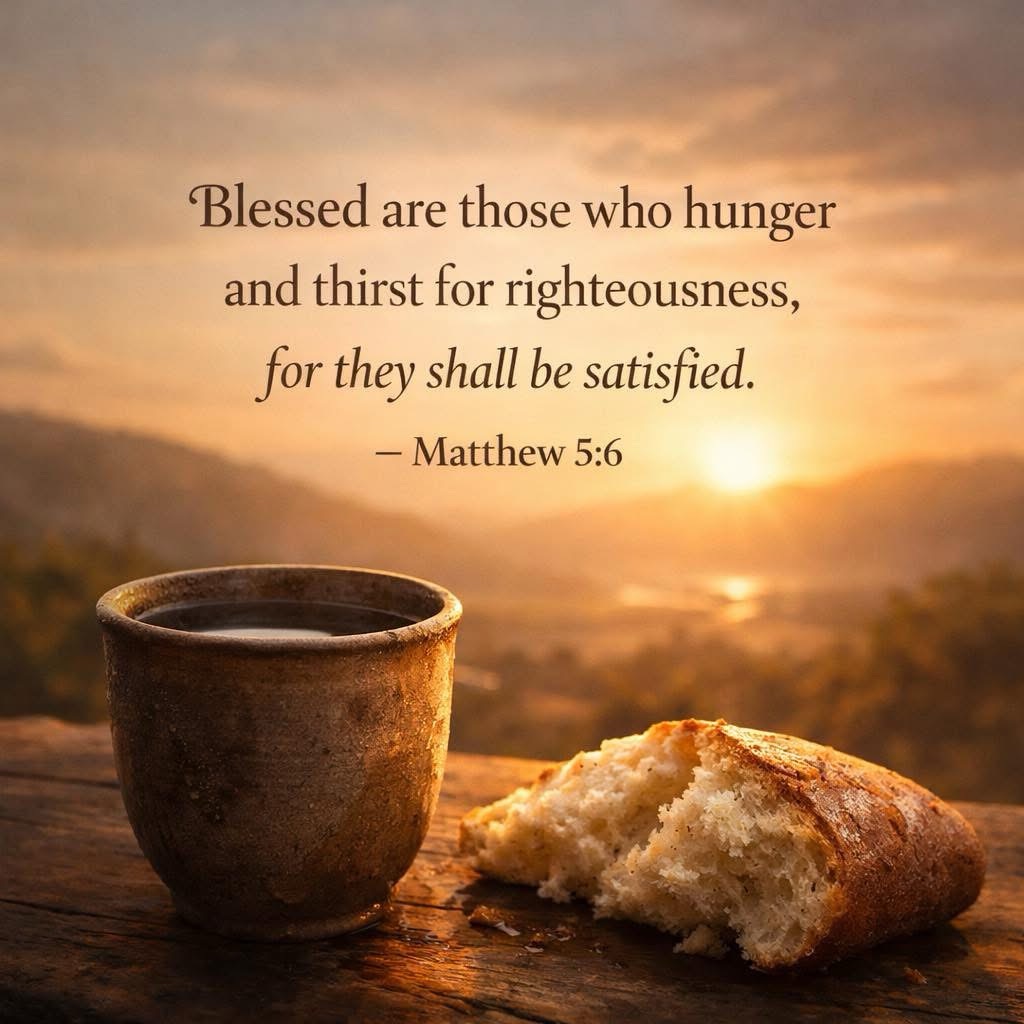
As many of you may know I’ve been reflecting on the Beattitudes from Jesus’s Sermon on the Mount! Today i’m reflecting on Matthew 5:6, and considering current events I believe this is timely. Matthew 5:6 says, “Blessed are those who hunger and thirst for righteousness, for they shall be satisfied.” After poverty of spirit humbles us, after mourning opens us up, and after meekness reshapes how we walk, Jesus now turns to desire. What do we actually want?
Hunger and thirst are not casual interests. They are not polite preferences. They are signals of need. When you are truly hungry or truly thirsty, everything else becomes secondary because that need is a matter of continued life. When someone is hungry or thirsty, comfort, convenience, and even dignity take a back seat to survival. Jesus chooses that language intentionally here. He’s not talking about people who admire righteousness or agree with it in theory. He’s blessing those who feel its absence so deeply that they ache for it.
And this hunger doesn’t appear out of nowhere. It’s the natural result of the first three Beatitudes. When you know you’re poor in spirit, you stop pretending you’re fine. When you mourn honestly, you stop numbing the pain. When you walk in meekness, you stop demanding your own way. And once all that is stripped away, something new rises up: a longing for what is truly right, truly good, truly aligned with God.
Righteousness here isn’t merely about moral behavior. It’s about rightness with God and rightness in the world He created. It’s a longing for justice where there is injustice, truth where there is distortion, holiness where sin has left things broken. It’s the ache that says, “This isn’t how things are supposed to be,” and the faith that believes God can make it right.
But there’s something important we can’t miss. Jesus doesn’t say the hungry and thirsty will achieve righteousness. He says they will be satisfied. That matters. Hunger implies dependence. Thirst admits a great need. I must make this clear: This isn’t self-made righteousness or spiritual performance. It’s the posture of someone who knows they cannot produce what they need, but trusts God to provide it.
And God does. Ultimately, He satisfies this hunger in Christ. Jesus is our righteousness! He lived the life we couldn’t live and gives us a righteousness we didn’t earn. But He doesn’t stop there. He continues to shape us, to grow us, to align our hearts with His; enabling us to live in such a way that is congruent with how he lived. In other words, the hunger remains, but it’s no longer empty. It’s met with grace, truth, and transformation.
The promise is sure: those who hunger and thirst for righteousness will not be left starving. God doesn’t tease His people with desires He refuses to fulfill. If you find yourself longing for holiness, for justice, for God’s will to be done in your life and in this world, that hunger itself is a sign of grace. And Jesus says you are blessed, because satisfaction is coming. And THAT is good news!
 bold-apologia